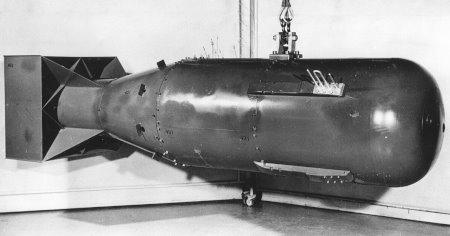
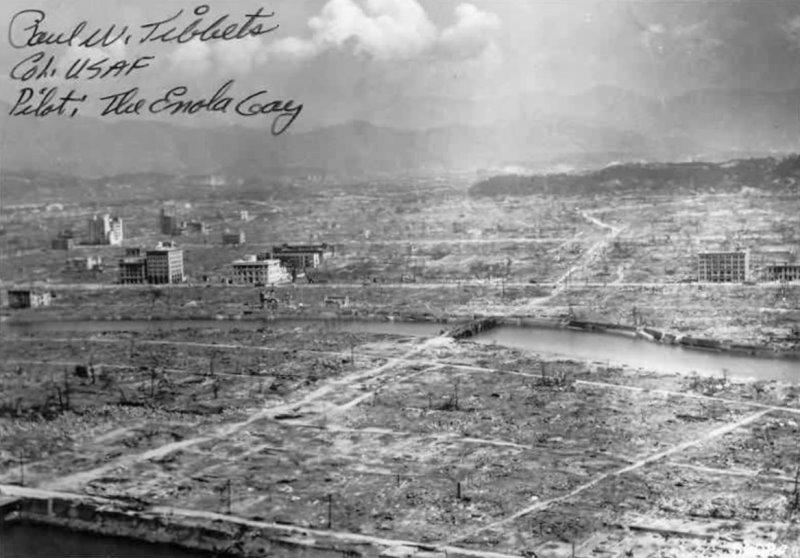


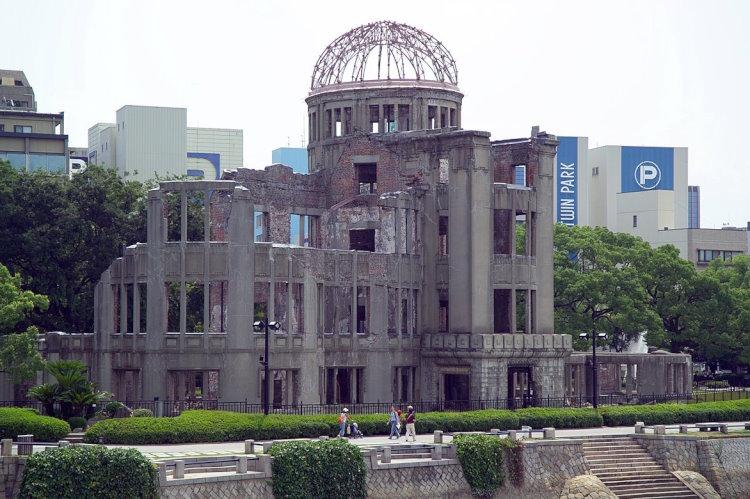
Hiroshima was a bustling city of approximately 350,000 residents (including Japanese citizens, Korean laborers, military personnel, and others) before and during World War II—a significant urban center with strategic military and communication importance. On the morning of August 6, 1945, at 8:15, the B‑29 bomber Enola Gay, commanded by Paul Tibbets, dropped the first atomic bomb ever used in warfare—code‑named “Little Boy”—on the city, marking an unprecedented moment in human history.
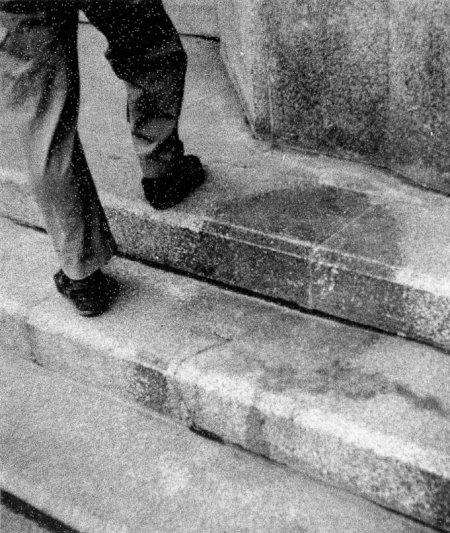
The bomb was detonated at an altitude of approximately 600 meters (1,800 feet) above ground to maximize its destructive effect. It was a uranium‑235 fission weapon equivalent to roughly 12–15 kilotons of TNT, approximately matching the impact of dozens of conventional B‑29 raids combined. Although this design was notoriously inefficient—only a tiny fraction of the uranium actually fissioned—the immediate incineration and vaporization were devastating. The characteristic mushroom cloud, reaching tens of thousands of feet, became a grim emblem of nuclear power; within a radius of about one mile, the city was utterly leveled. Temperatures at the fireball’s core soared to near 300,000 °C, incinerating everything and, in many cases, vaporizing human bodies and structures instantly.
Estimates suggest that around 70,000 people died instantly, with total deaths by the end of 1945 reaching about 140,000, as survivors succumbed to burns, radiation sickness, and other injuries. Life slowly returned to Hiroshima in the years afterward: by 1947, rebuilding was underway and the population had recovered in part, though the city was never completely evacuated—survivors remained amid ruins and later led reconstruction efforts.
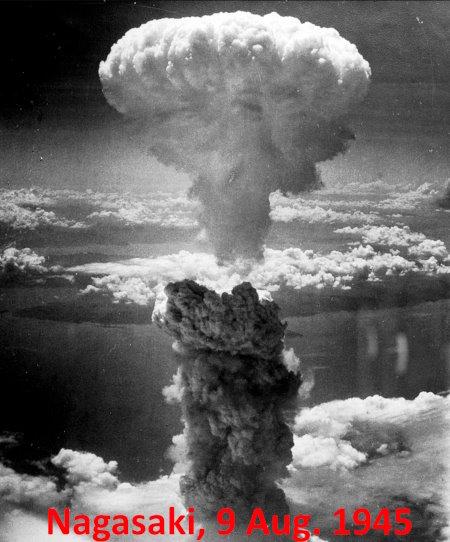
Three days later, on August 9, a second atomic bomb was dropped on Nagasaki, becoming the last nuclear weapon used in war. Humanity has been fortunate that no further atomic bombs have been used in conflict since. However, the moral and strategic necessity of the bombings remains fiercely debated—there are arguments both that they saved lives by forcing Japan’s surrender and that they might have been avoidable.
The postwar nuclear arms race consumed vast human and material resources toward weapons of mass destruction. Since 1945, there have been over 2,000 nuclear test explosions, and as of 2024, roughly 12,100 nuclear warheads are globally deployed, held by nine nations (U.S., Russia, China, France, UK, Pakistan, India, Israel, North Korea). Alone, these warheads represent enough destructive capacity to annihilate all life on Earth multiple times over.
I am overwhelmed by sorrow to reflect on how casually politicians still reference nuclear weapons today, even though the reality of Hiroshima and Nagasaki should serve as the starkest warning. The legacy is one of trauma and resilience—but also of urgent caution. Hearing threats of nuclear war used flippantly is profoundly disturbing, given the unimaginable suffering that even two bombs inflicted.
Written on August 6, 2025, on the occasion of the 80th anniversary of the dropping of the first atomic bomb.
Sources:
- City of Hiroshima – Peace Memorial Information
Population figures, historical impact, reconstruction details
https://www.city.hiroshima.lg.jp/english/peace/1029875/1010074.html - Wikipedia – Hiroshima
General historical context, timeline, population, aftermath
https://en.wikipedia.org/wiki/Hiroshima - Wikipedia – Timeline of Hiroshima
Reconstruction timeline and demographic recovery
https://en.wikipedia.org/wiki/Timeline_of_Hiroshima - IWM (Imperial War Museums) – The Atomic Bombs That Ended the Second World War
Bomb types, necessity debate, strategic considerations
https://www.iwm.org.uk/history/the-atomic-bombs-that-ended-the-second-world-war - The Bulletin of the Atomic Scientists – Analysis of Nuclear Explosions
Yield, altitude of detonation, effect optimization
https://thebulletin.org/ - Business Insider – Hiroshima Bombing Visual Timeline
Details about the explosion, mushroom cloud, thermal effects
https://www.businessinsider.com/photos-hiroshima-timeline-bombing-wwii-manhattan-project-2023-8 - Our World in Data – Nuclear Weapons and Tests
Number of tests, current arsenal statistics
https://ourworldindata.org/nuclear-weapons - ICAN (International Campaign to Abolish Nuclear Weapons) – Global Nuclear Arsenals
Current warhead estimates and nuclear-armed states
https://www.icanw.org/nuclear_arsenals - Al Jazeera – Impact of Nuclear Tests Worldwide
Cumulative test figures and environmental consequences
https://www.aljazeera.com/news/2022/8/29/infographic-what-is-the-impact-of-nuclear-tests-around-the-world-interactive