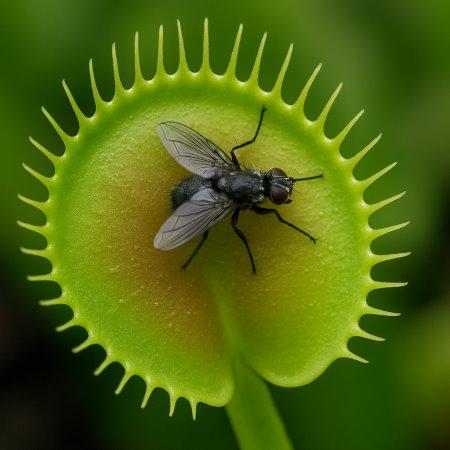


Plants are rarely carnivorous.
Carnivorous plants are a unique group of plants that have adapted to trap and digest small animals, usually insects, to survive in nutrient-poor environments. Unlike most plants that rely solely on soil nutrients, these plants obtain essential nitrogen and minerals by capturing prey. There are over 800 known species of carnivorous plants, which is a very small number compared to the 390,000 plant species on Earth (less than 0.2%). Carnivorous plants have evolved in different parts of the world and use a variety of trapping methods, such as sticky leaves, pitfall traps, snap traps, and suction traps. The most well-known genera include:
- Drosera (sundews) – about 200 species, using sticky glandular leaves.
- Nepenthes (tropical pitcher plants) – around 170 species with large pitfall traps.
- Sarracenia (North American pitcher plants) – about 11 species.
- Dionaea muscipula (Venus flytrap) – famous for its snap trap; only one species exists.
Other genera include Pinguicula (butterworts), Genlisea, and Heliamphora.

These fascinating plants demonstrate how life can adapt to extreme conditions through extraordinary strategies.
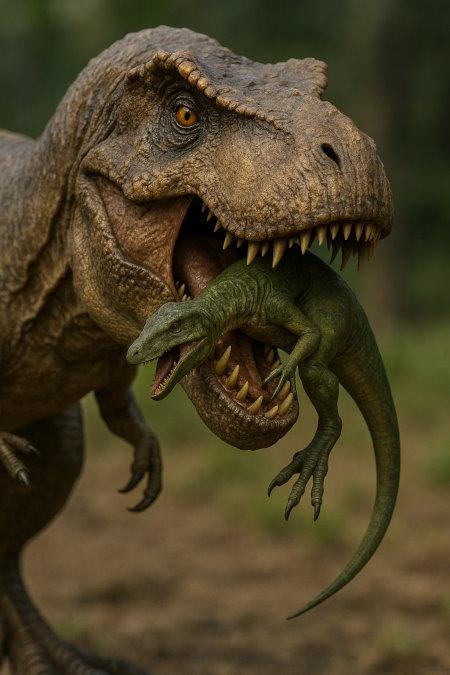
And while carnivory in plants is an unusual evolutionary strategy, in the animal kingdom it’s almost the rule rather than the exception.
Among mammals, birds, reptiles, amphibians, and fish, carnivory or omnivory is very common. In fact, the majority of animal species are at least partly carnivorous, especially insects, fish, reptiles, and most marine organisms.