

Involving/using cables or wire ropes.
Που έχει να κάνει με / χρησιμοποιεί καλώδια (cables) ή συρματόσχοινα (wire ropes).
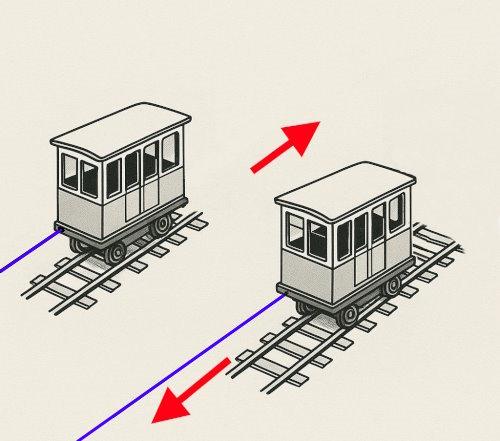
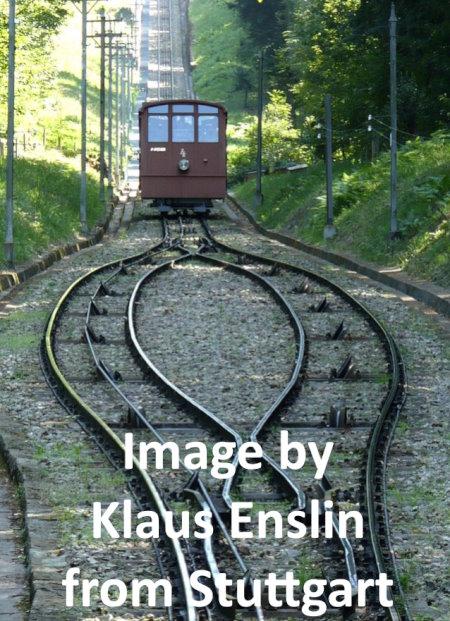
Most often it is a ground-based, rail vehicle, counterbalanced by another car.
Many early funiculars were built using water tanks under the floor of each car, which were filled or emptied until just sufficient imbalance was achieved to allow movement, and a few funiculars still operate that way. The car at the top of the hill is loaded with water until it is heavier than the car at the bottom, causing it to descend the hill and pull up the other car. The water is drained at the bottom, and the process repeats with the cars exchanging roles.
Greeks often don’t distinguish between the two systems — unless they want to be very precise, in which case they add a qualifier (π.χ. εναέριο vs. πλαγιάς). That’s why many Greeks will say “πάμε με το τελεφερίκ στον Λυκαβηττό”, even though technically it’s a funicular, not an aerial cable car.